Description
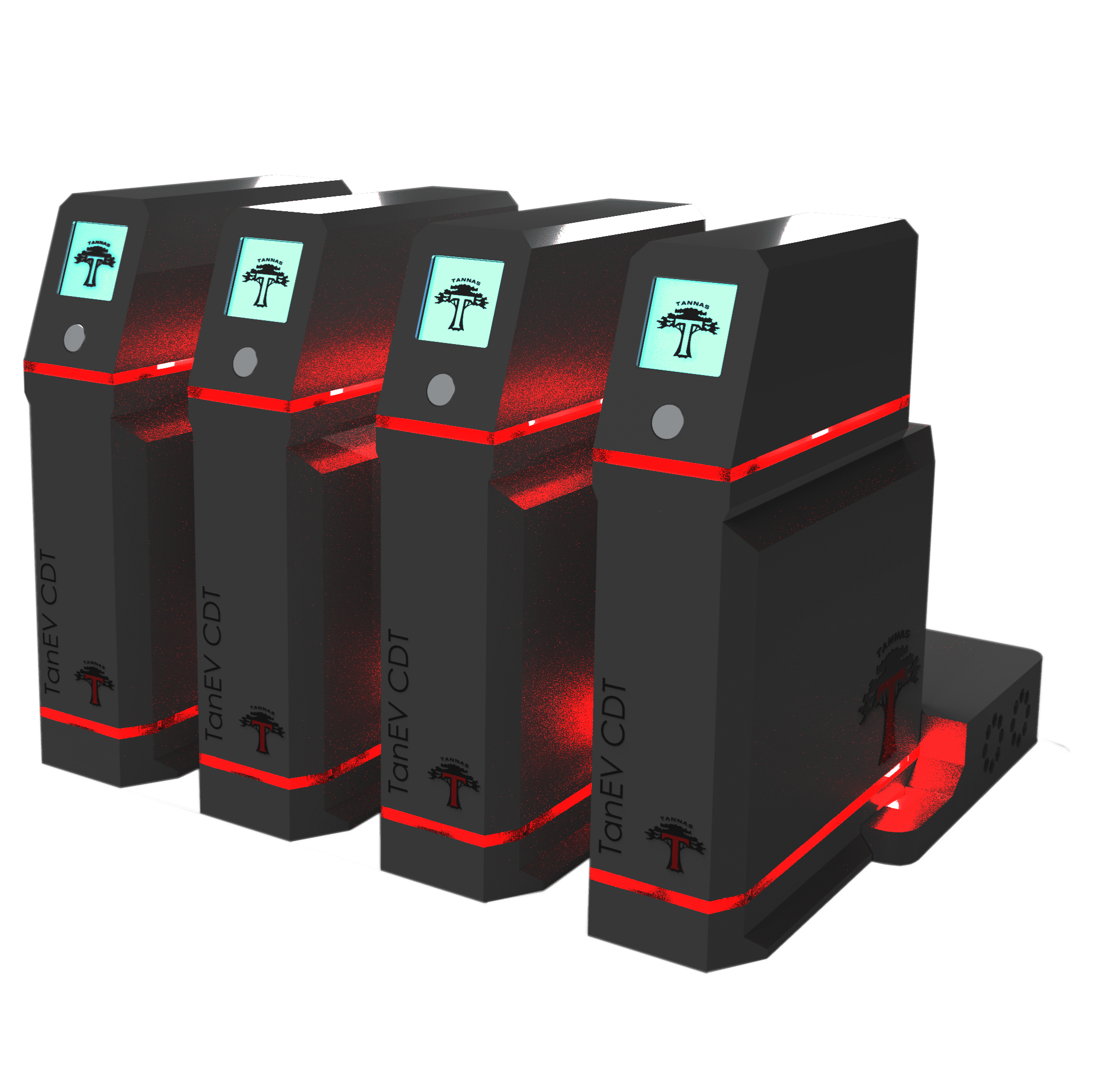
Conductive Deposit Test: The CDT instrument is designed to determine the tendency of lubricating fluids to form conductive layer deposits on exposed copper motor windings, connectors, and electrical components at elevated temperatures in an Electrified Vehicle (EV) Drivetrain. A specially modified circuit board (PCB) is lowered into ~20 mL of test fluid at 150°C for ~500 hours while supplied with a 5V DC signal. The resistance, in Ohms supplied to two voltage loops on the PCB, is
measured in both the liquid and vapor phases the duration of the test. A failed test occurs
when deposits conduct across copper traces on the PCB.
Find out more here